13 Open Layout Living Room Dining Room Ideas That Feel Effortless and Beautiful
Ever walk into your open layout and feel like something’s just off? The space is big, but it doesn’t feel connected. The dining area looks separate, the living room feels unfinished, and nothing flows the way you imagined. You’re not alone. Designing an open layout living room dining room can feel tricky—but when done right, it becomes the heart of your home. These open layout living room dining room ideas will help you create a space that feels warm, balanced, and beautifully pulled together.
1. Define Spaces with a Statement Area Rug
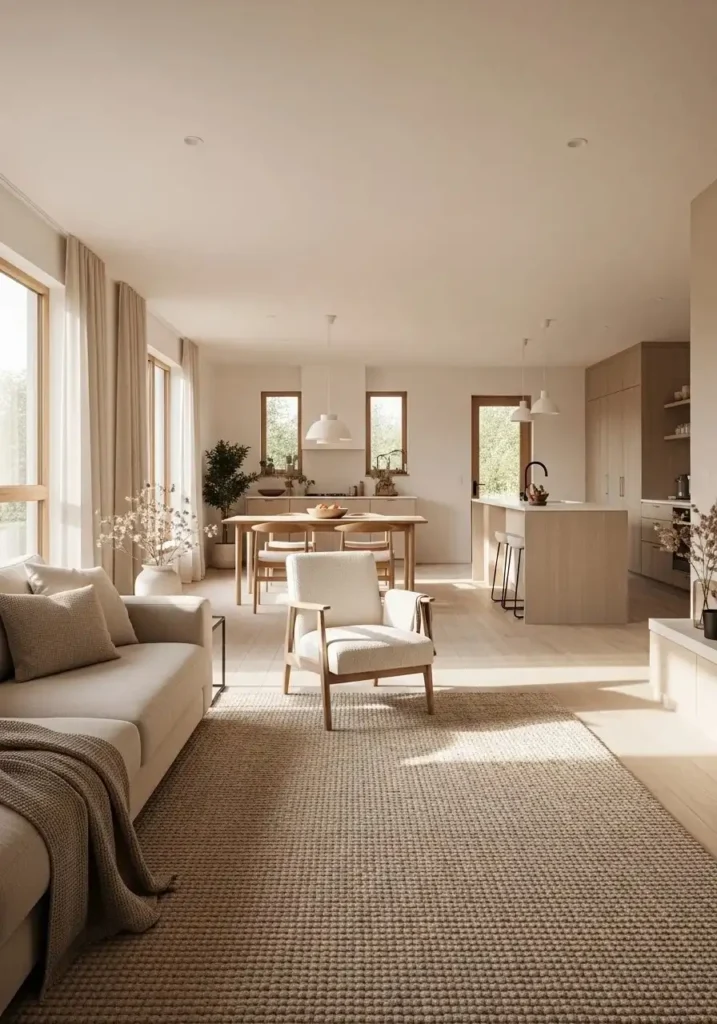
A large, soft area rug can instantly anchor your living room within an open layout. Think neutral tones like beige, cream, or soft gray layered with subtle textures. It visually separates the lounge area from the dining space without using walls. This works because it creates a “zone” your eye can recognize. The space feels intentional instead of scattered.
Tip: Choose a rug large enough so at least the front legs of your sofa and chairs sit on it—it makes everything feel cohesive.
2. Use a Cohesive Color Palette Throughout
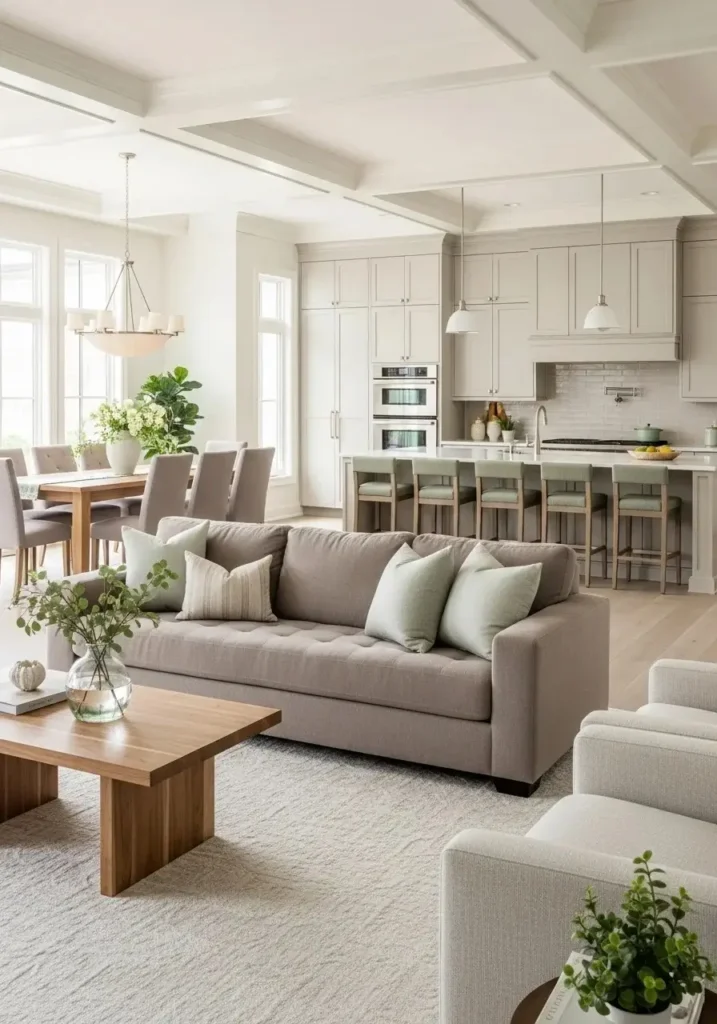
When your living and dining areas share the same color story, everything feels connected. Try warm neutrals like taupe, ivory, and soft wood tones, or go for a modern palette with white, black, and muted greens.
This idea works because color creates harmony across different zones. Even if furniture styles vary slightly, the space still feels unified.
Tip: Repeat one or two accent colors (like cushions and dining chairs) to tie both areas together effortlessly.
3. Create Flow with Matching Wood Finishes
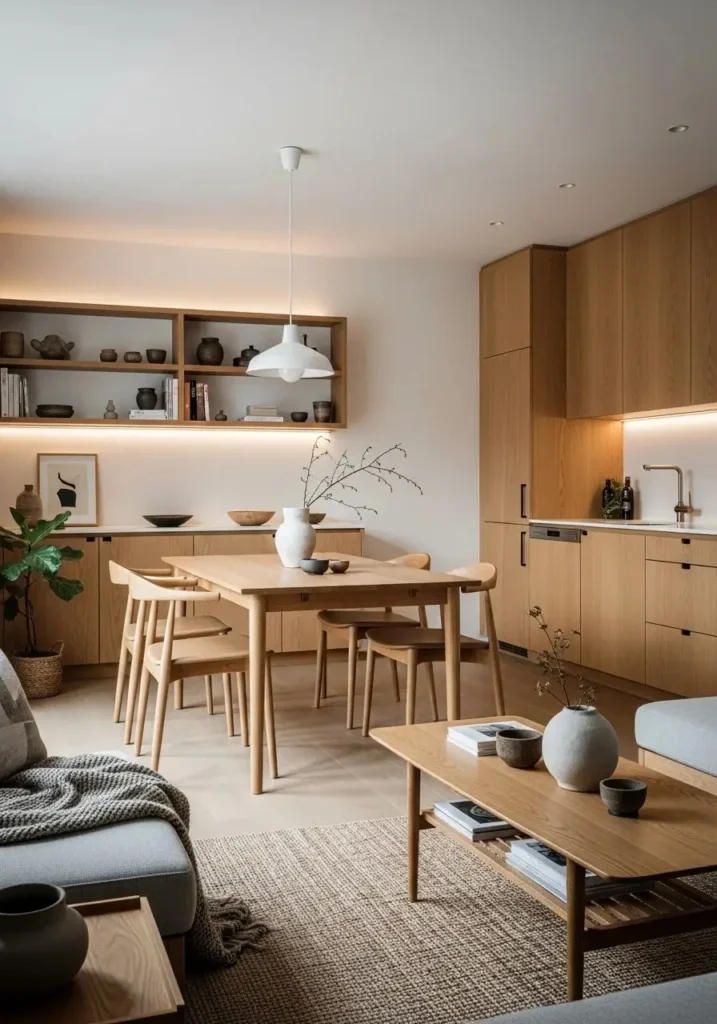
Mixing too many finishes can break visual flow. Instead, choose similar wood tones for your dining table, coffee table, and shelving. Light oak for a Japandi feel or dark walnut for a richer look works beautifully. This works because consistent materials guide the eye naturally through the space. It feels calm and curated.
Tip: If exact matches aren’t possible, stay within the same undertone—warm woods with warm, cool with cool.
4. Add a Lighting Layer for Each Zone
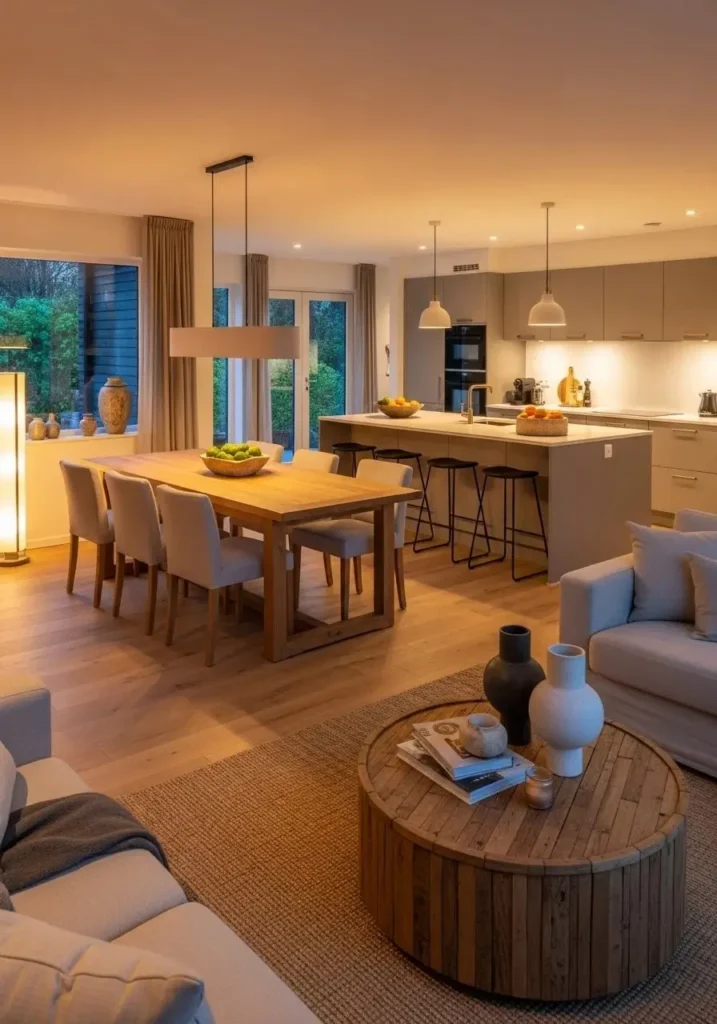
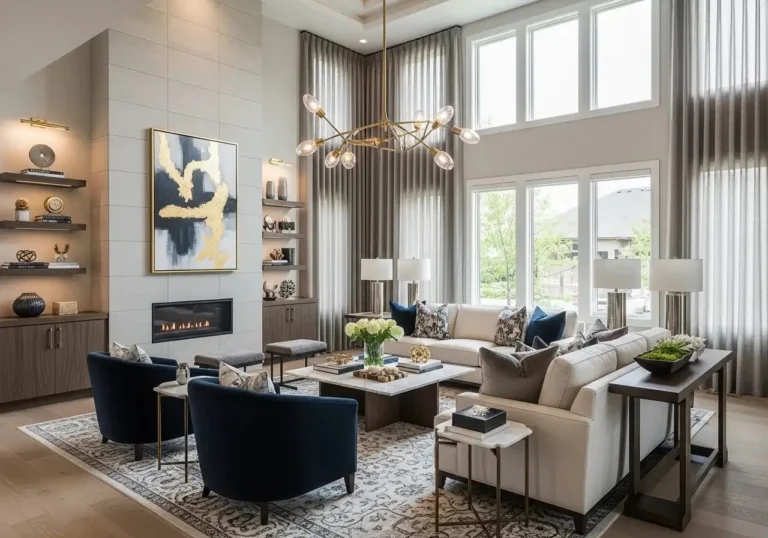
Lighting can define areas without taking up floor space. A soft pendant light above the dining table and a cozy floor lamp in the living area instantly separate the zones. This works because lighting creates mood and purpose. The dining area feels intimate, while the living room feels relaxed.
Tip: Use warm light bulbs (around 2700K) to keep the entire space feeling cozy and inviting.
Also Read This Amazing Ideas: 17 Accent Walls in Living Room Ideas That Instantly Transform Your Space
5. Position Your Sofa as a Subtle Divider
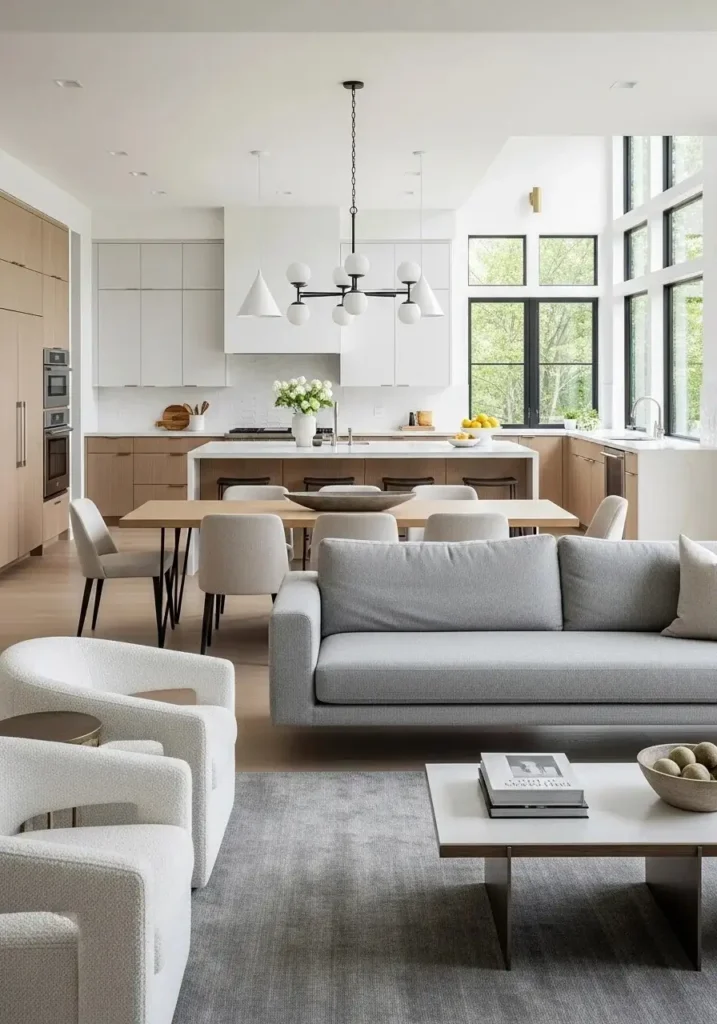
Instead of pushing your sofa against the wall, float it in the middle to separate the living room from the dining area. This creates a natural boundary without closing off the space. It works because furniture placement defines zones while keeping the open feel intact. The layout looks intentional and balanced.
Tip: Add a slim console table behind the sofa for extra styling and storage without cluttering the space.
6. Choose a Dining Table That Fits the Scale
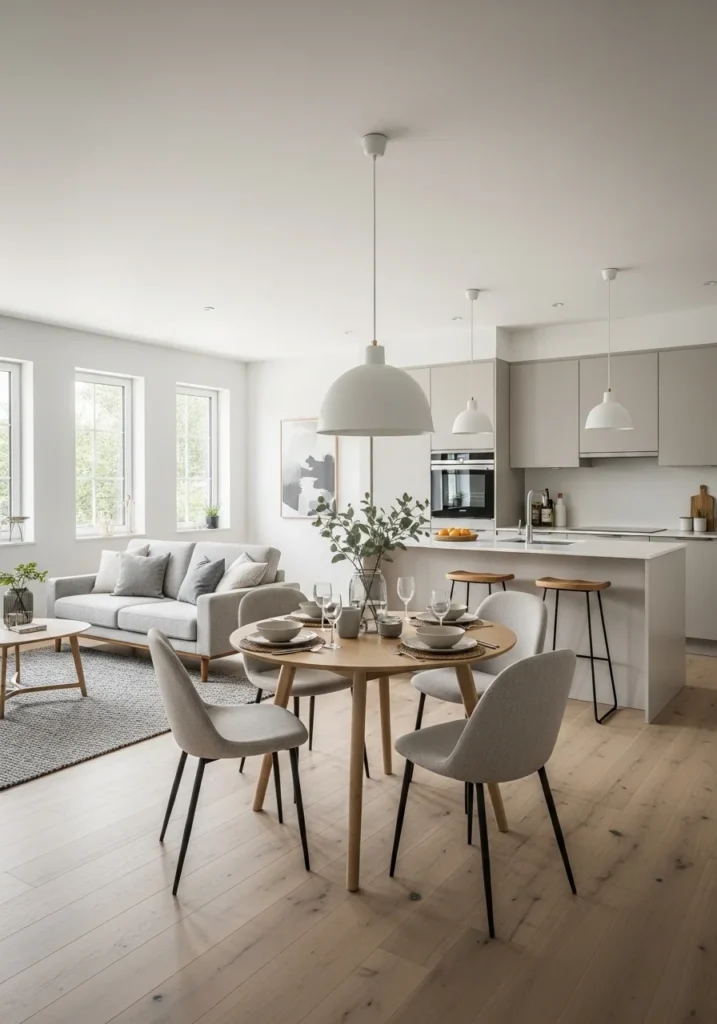
In an open layout, oversized furniture can overwhelm the space. A sleek rectangular or round dining table that complements your living area keeps everything balanced. This works because proportion is key in open spaces. When the dining table fits just right, the entire layout feels more breathable and functional.
Tip: If your space is tight, go for a round table—it improves flow and makes movement easier.
7. Add a Statement Light Above the Dining Area
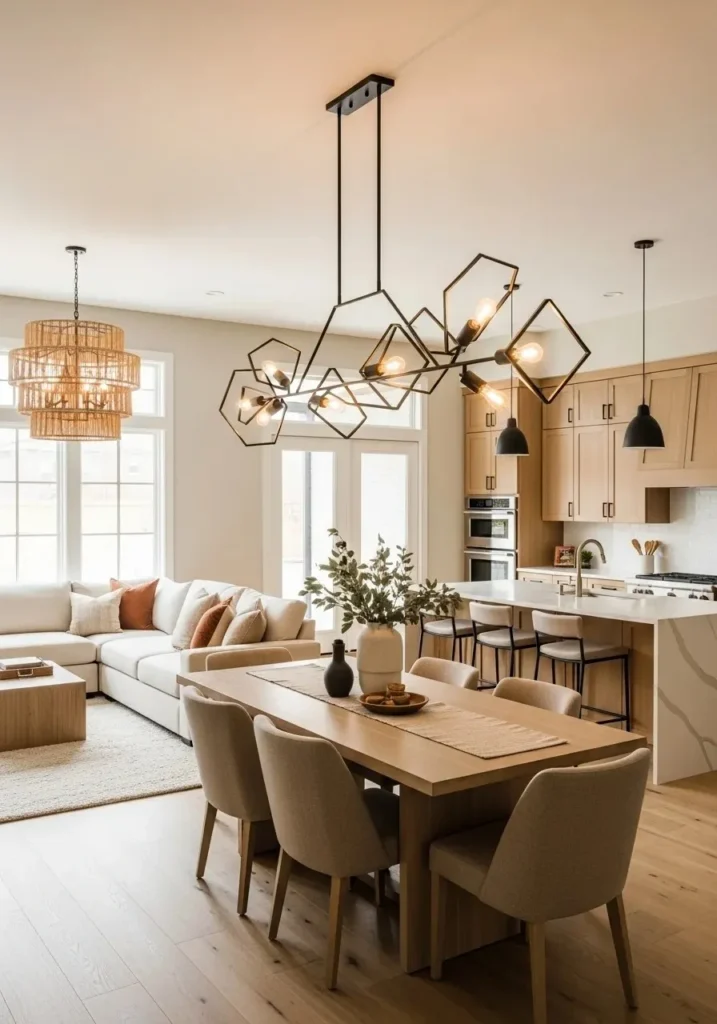
A bold pendant or chandelier above your dining table can instantly define the space in an open layout. Think woven rattan for a soft, natural look or a sleek black fixture for a modern vibe. This works because it draws the eye upward and clearly marks the dining zone without adding visual clutter. It also adds personality and depth.
Tip: Hang your light about 30–36 inches above the table for the perfect balance of style and function.
Also Read This post: 13 Curtains Living Room Ideas to Instantly Elevate Your Space
8. Use Open Shelving as a Soft Divider
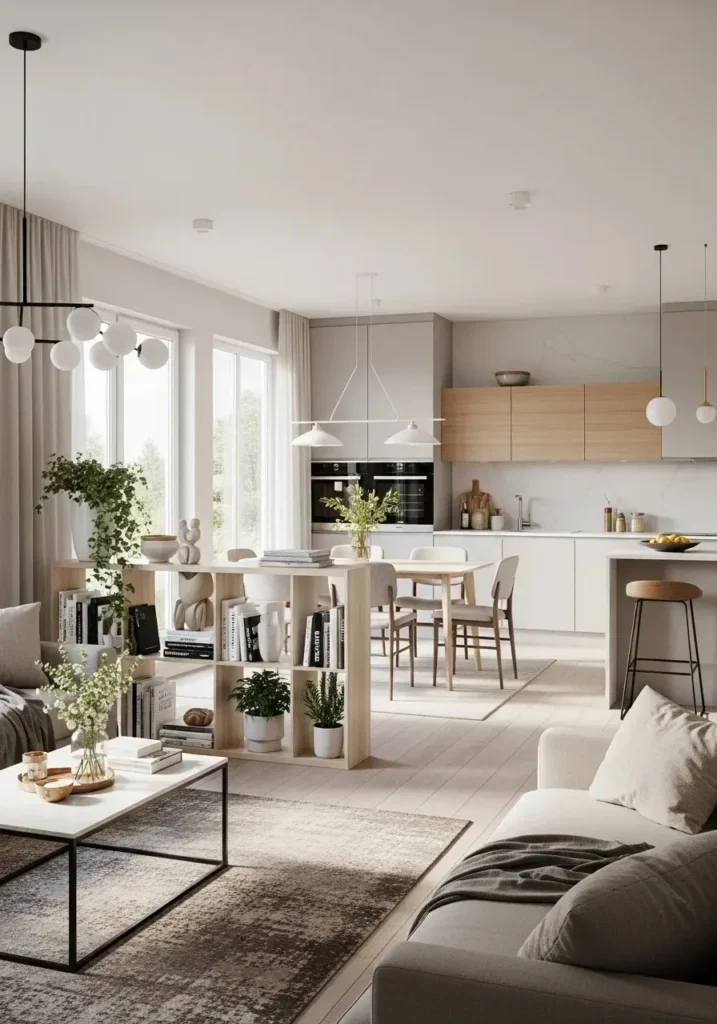
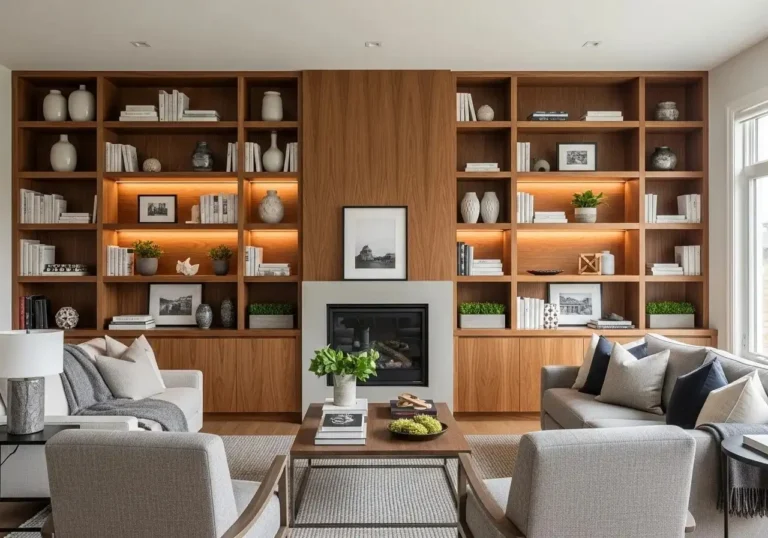
Open shelving can act as a subtle boundary between your living and dining areas while still keeping the space airy. Style it with books, ceramics, and a few plants for a relaxed, curated feel. This works because it separates zones without blocking light or making the layout feel closed off. It adds both function and style.
Tip: Keep shelves lightly styled—too many items can make the space feel cluttered instead of calm.
9. Layer Textures for a Cozy, Connected Feel
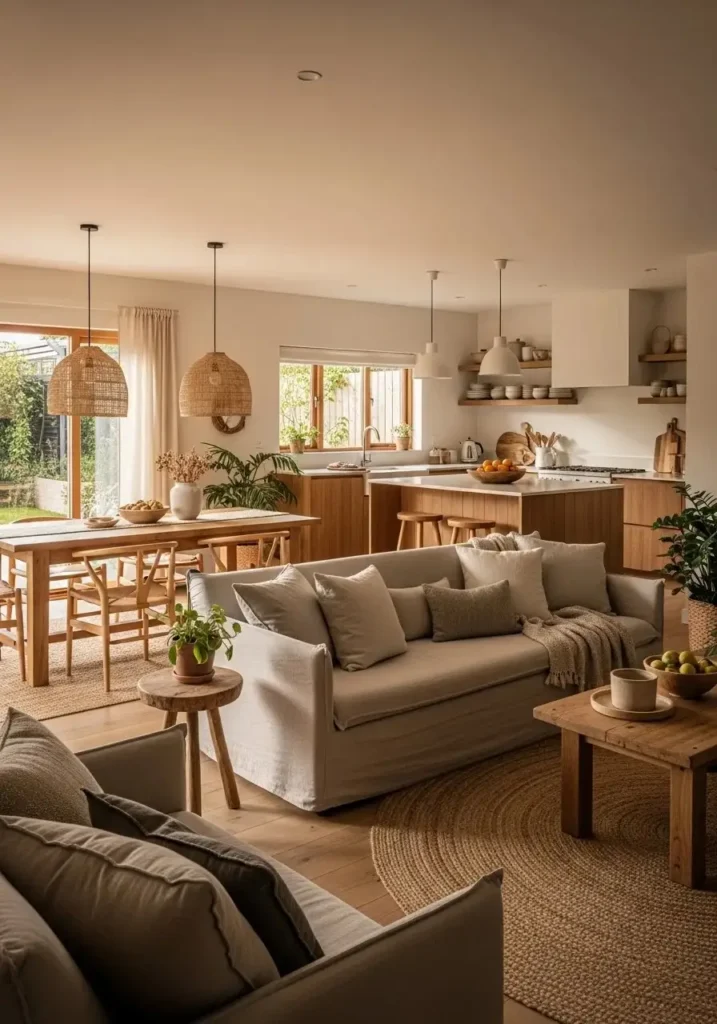
In open layout living room dining room ideas, texture plays a huge role in making the space feel warm and inviting. Combine soft fabrics, wood, metal, and natural fibers like linen or jute. This works because texture adds depth without needing bold colors. It keeps the space visually interesting while maintaining a calm, cohesive look.
Tip: Mix at least three textures in each zone to create a balanced and cozy atmosphere.
10. Align Furniture for Visual Flow
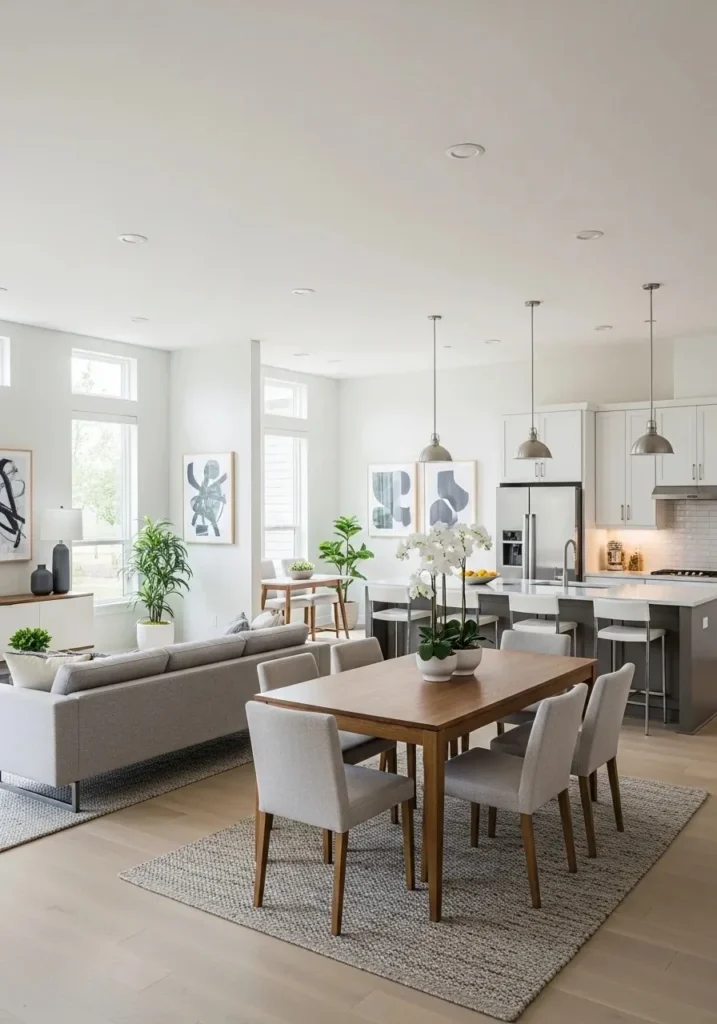
Arrange your furniture so it naturally guides movement through the space. Keep pathways clear and align major pieces like the sofa and dining table in a way that feels intuitive. This works because a well-planned layout makes the room feel effortless and easy to navigate. It enhances both function and comfort.
Tip: Leave at least 3 feet of walking space between zones for a smooth and open flow.
Also Read This Post: 12 Living Room with Fireplace Ideas That Feel Warm and Inviting
11. Add a Focal Point That Connects Both Areas
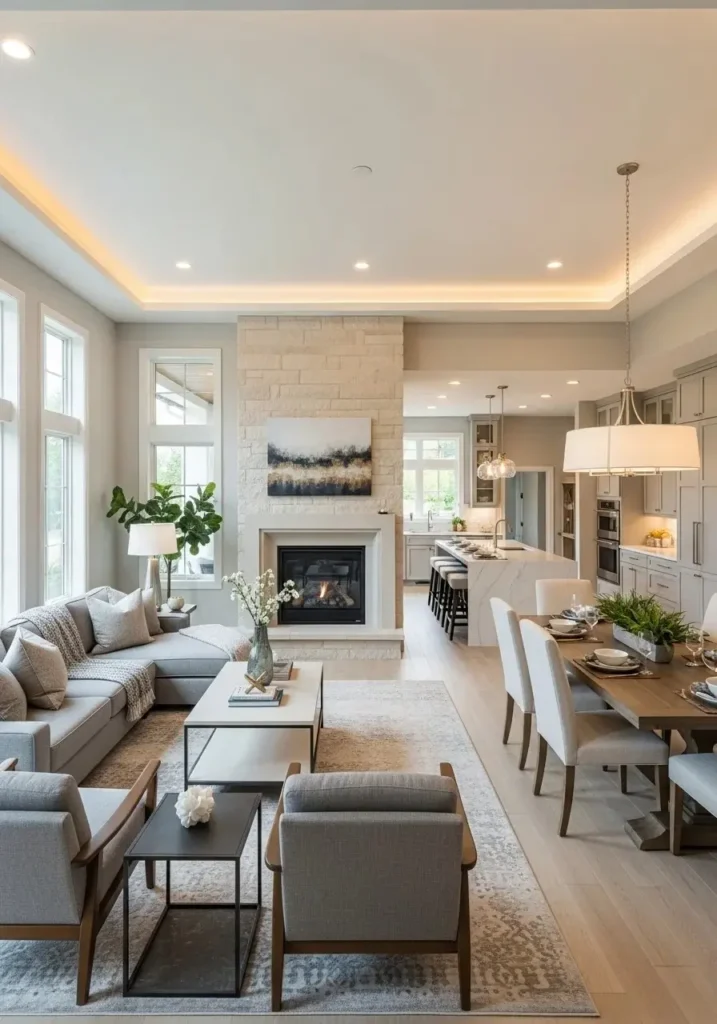
A shared focal point, like a fireplace, large artwork, or a feature wall, can visually tie your living and dining spaces together. Choose something that can be seen from both areas. This works because it creates a sense of unity. Instead of feeling like two separate rooms, the space feels like one cohesive design.
Tip: Keep the focal point simple and impactful—avoid overcrowding it with too many elements.
12. Bring in Greenery for Freshness and Balance
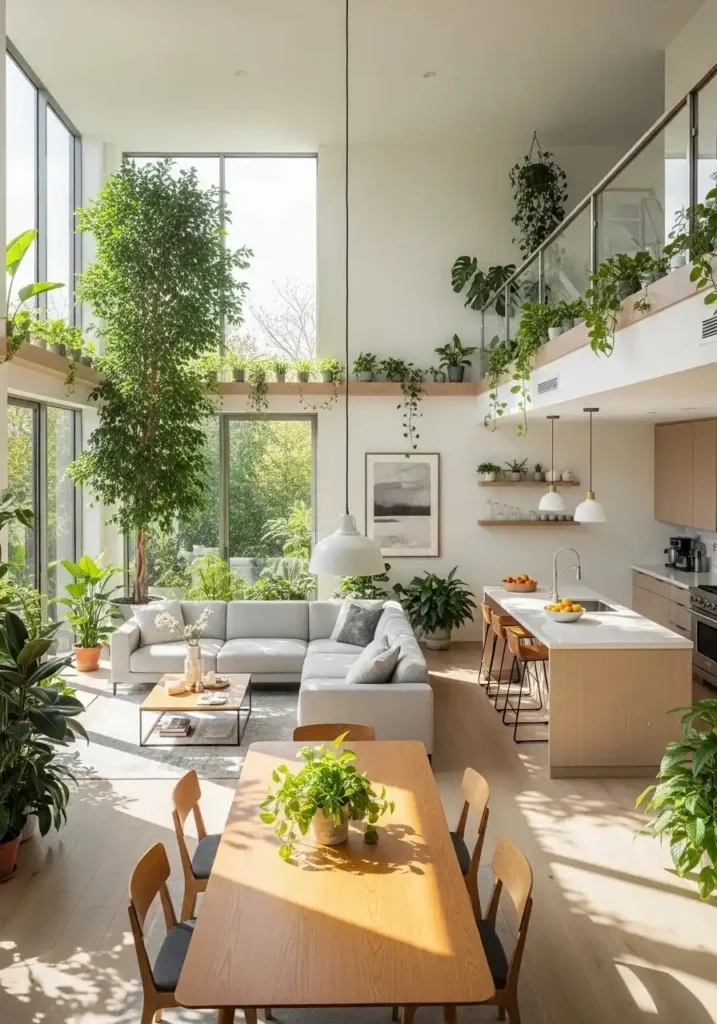
Plants can soften the look of an open layout while adding life and color. Place a tall plant in a corner or smaller ones on shelves and tables to connect both areas. This works because greenery naturally blends different zones and creates a calming, organic feel. It makes the space feel more lived-in and welcoming.
Tip: Use a mix of plant sizes to create visual interest without overwhelming the room.
13. Keep Decor Minimal but Meaningful
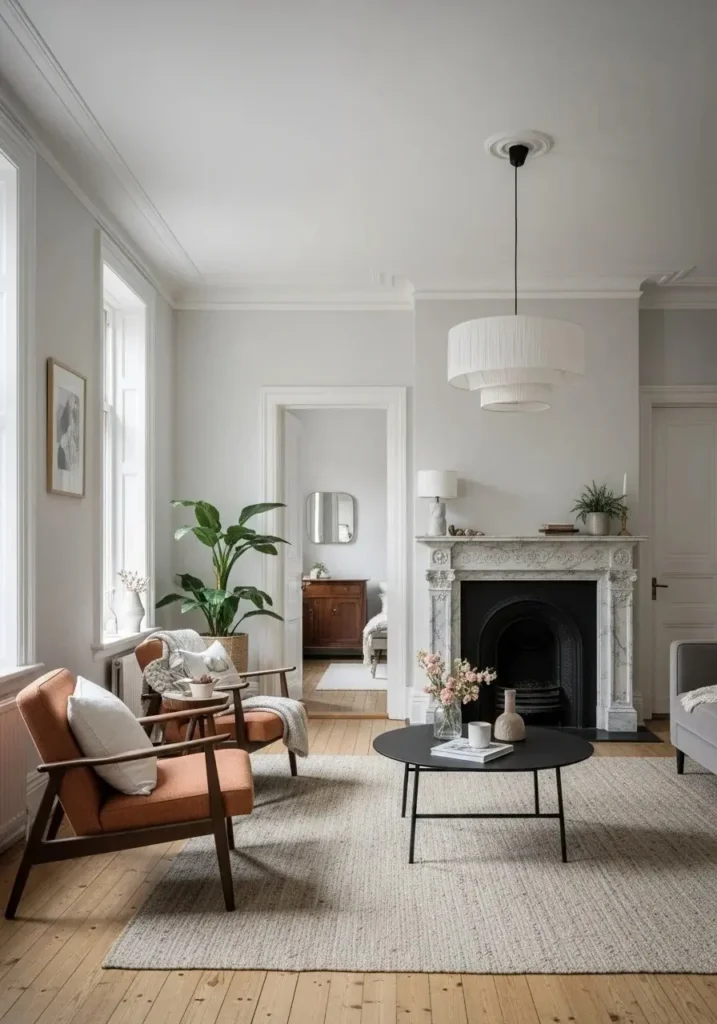
In open spaces, too much decor can quickly feel overwhelming. Choose a few meaningful pieces—like artwork, vases, or textiles—that reflect your style without cluttering the space. This works because minimal decor allows each piece to stand out while keeping the overall look clean and serene. It enhances the open, airy feel.
Tip: Follow the “less but better” rule—edit your decor regularly to keep the space fresh.
Conclusion
Designing a space that feels both open and connected doesn’t have to be overwhelming. With the right balance of layout, color, texture, and thoughtful details, your home can feel effortlessly cohesive and inviting. These open layout living room dining room ideas are all about creating flow while still giving each area its own purpose. Start small—maybe with lighting or a rug—and build from there. Over time, you’ll create a space that not only looks beautiful but also feels like the perfect place to relax, gather, and truly live.