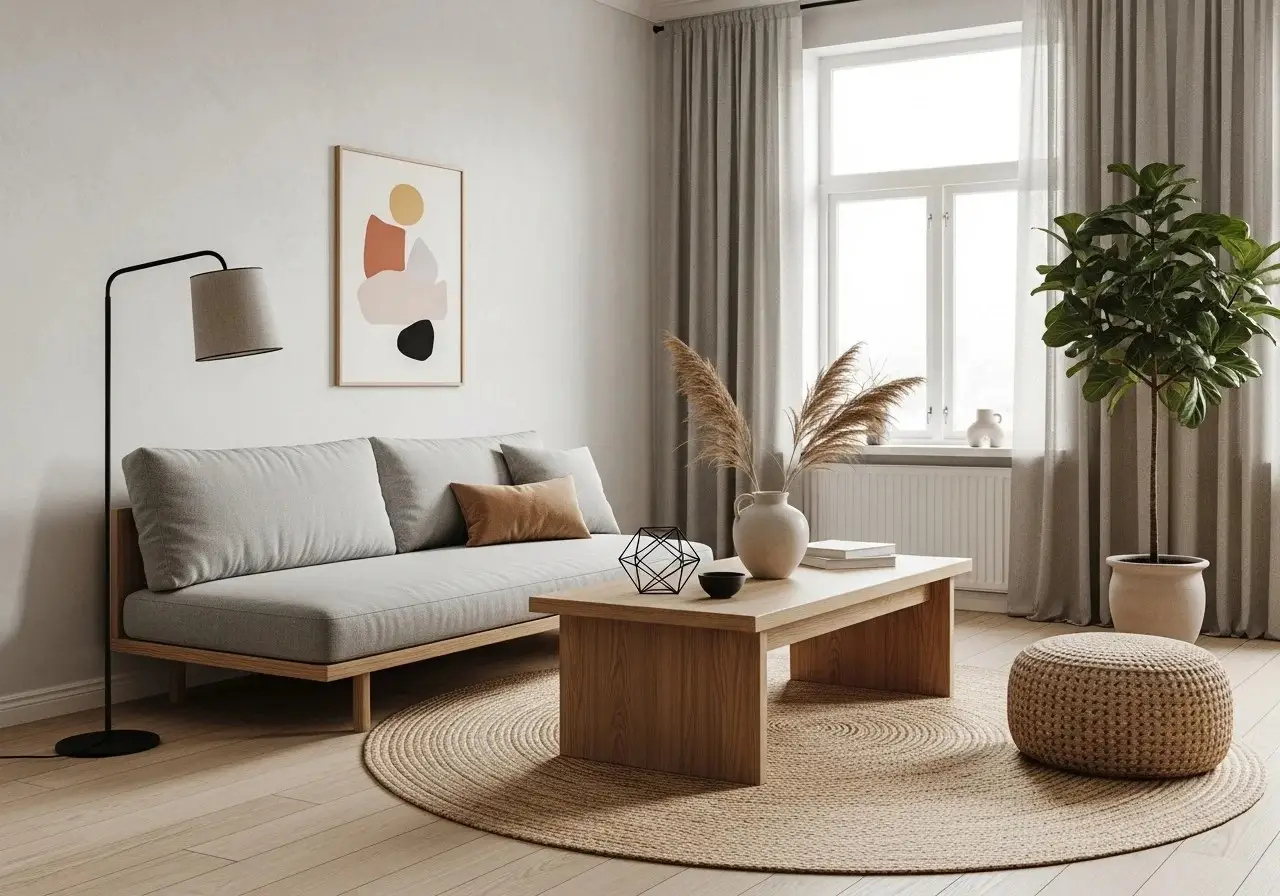
21 Japandi Living Room Ideas That Feel Calm, Minimal, and Beautiful
Ever walk into your living room and feel like it’s too busy, too loud, or just… not relaxing? You’re not alone. In a world full of clutter and constant noise, your home should feel like a peaceful escape. That’s where Japandi living room ideas come in—a perfect blend of Japanese simplicity and Scandinavian warmth. Think clean lines, soft textures, and calming tones that instantly make you exhale. If you’re craving a space that feels minimal yet cozy, these ideas will help you create a living room you truly love coming home to.
1. Start with a Neutral, Calming Color Palette
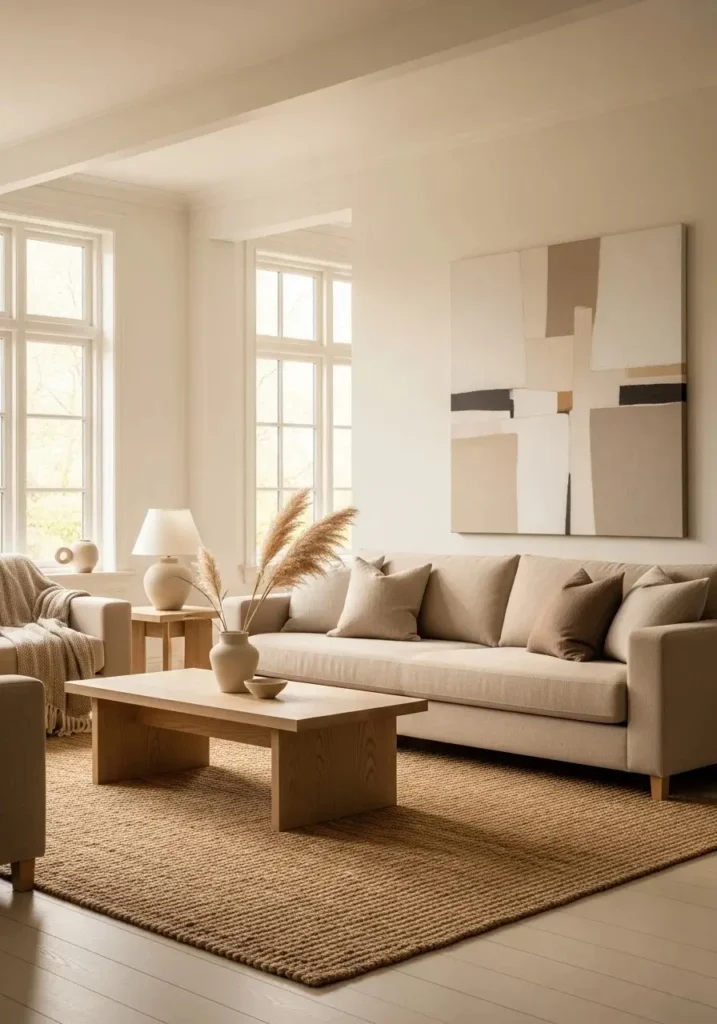
A Japandi living room always begins with a soft, neutral base. Think warm whites, beige, taupe, and muted gray layered together for a soothing effect. These colors reflect light beautifully and create an instant sense of calm.
This works because neutral tones reduce visual noise and make your space feel open and airy. It’s easier to relax when your surroundings aren’t overwhelming.
Tip: Add depth by mixing shades—pair creamy walls with slightly darker furniture instead of keeping everything the same tone.
2. Choose Low, Minimal Furniture
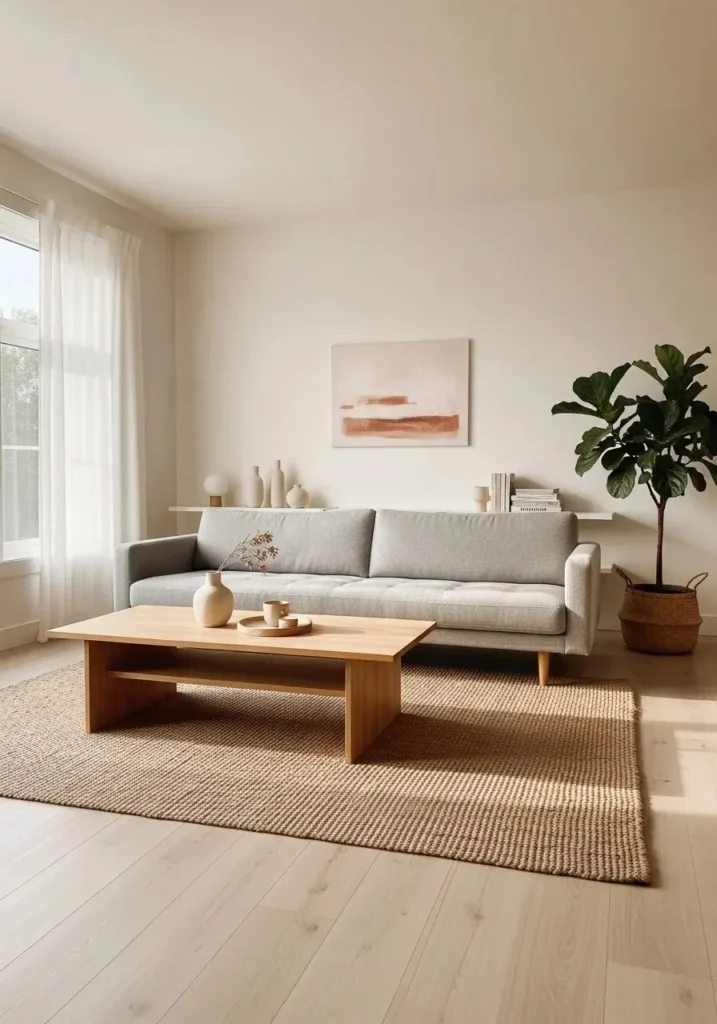
Low-profile furniture is a signature of Japandi design. Sofas sit closer to the ground, coffee tables are simple and understated, and everything feels grounded.
This works because it visually opens up the room and creates a peaceful, uncluttered look. It also connects your space to a more natural, earth-centered feel.
Tip: Look for furniture with clean lines and avoid bulky shapes to keep the room feeling light and balanced.
3. Mix Wood Tones for Warmth
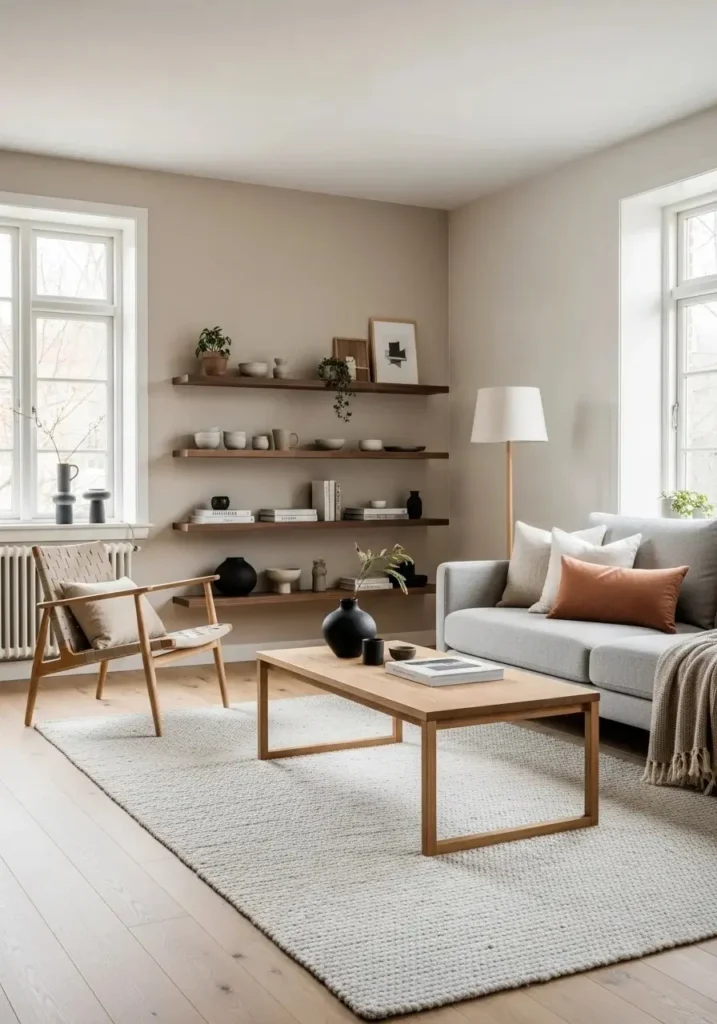
Japandi style beautifully combines light Scandinavian woods with deeper Japanese tones. Think oak, ash, walnut, and teak layered together. This works because it adds warmth without clutter. The natural wood textures create a cozy atmosphere while still keeping things minimal.
Tip: Stick to similar undertones—warm woods with warm, cool with cool—to keep the space cohesive.
4. Keep Decor Intentional and Minimal
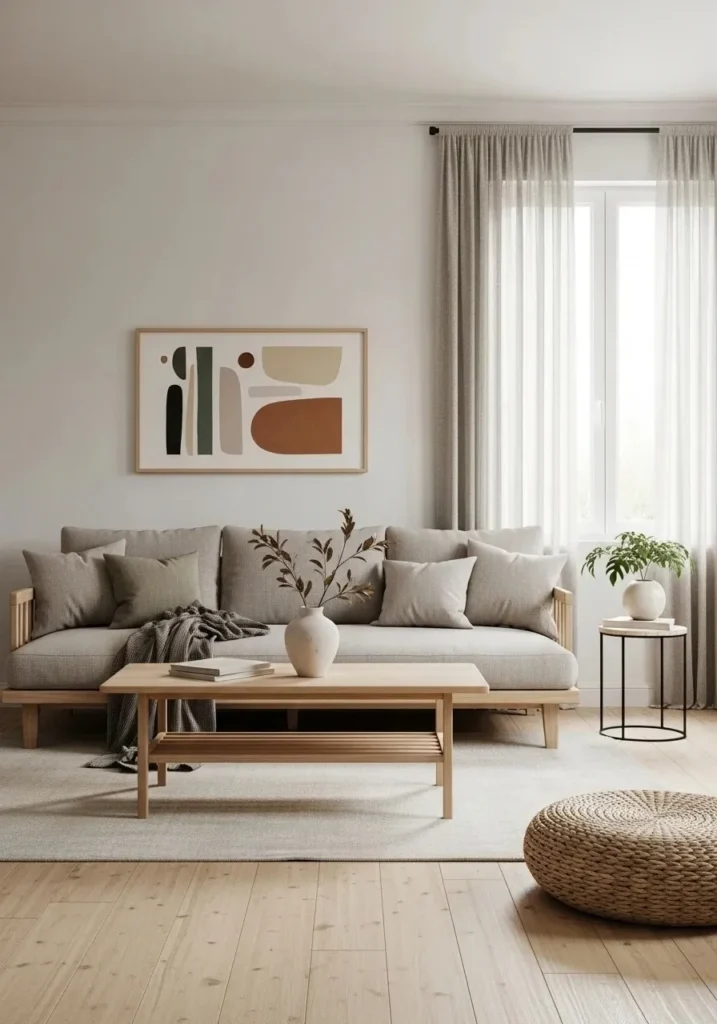
Less is truly more in a Japandi living room. Instead of filling shelves with decor, choose a few meaningful pieces like a ceramic vase or a simple artwork. This works because it gives each item space to breathe. The room feels calm instead of crowded, and every piece feels special.
Tip: If something doesn’t serve a purpose or bring joy, remove it—it instantly elevates the space.
5. Add Soft, Layered Textures
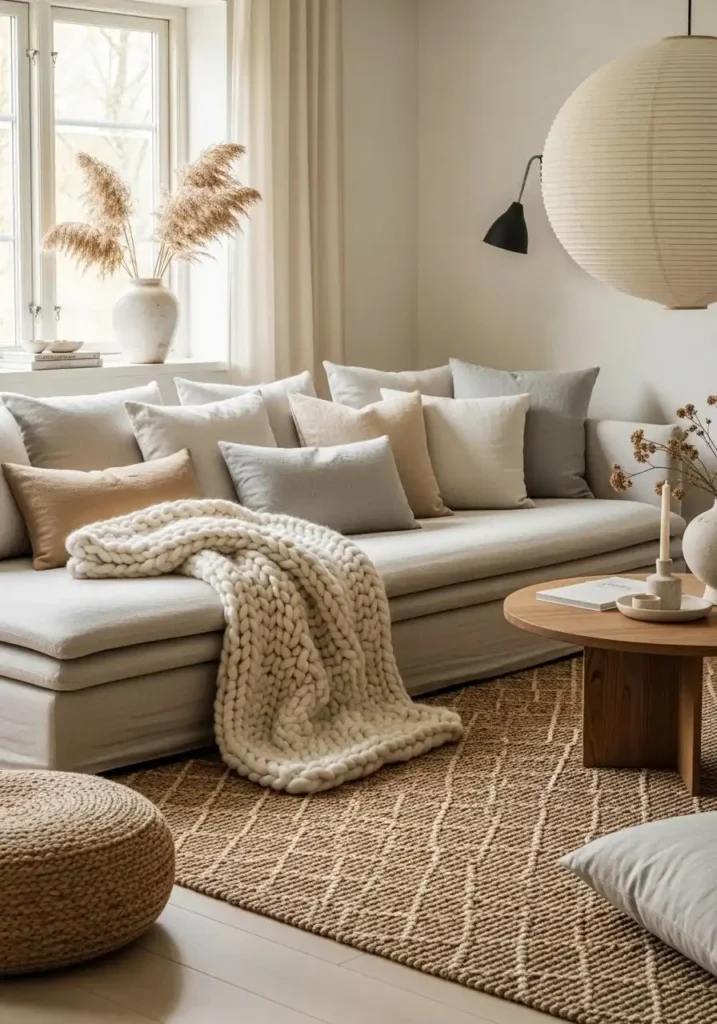
While Japandi is minimal, it’s never cold. Soft textures like linen cushions, wool throws, and woven rugs add comfort and depth. This works because texture creates warmth without relying on bold colors or patterns. It makes the space feel inviting and lived-in.
Tip: Combine at least two or three textures—like wood, fabric, and natural fibers—for a balanced look.
This Amazing Post Also For You: 18 Wall Decor for Living Room Ideas to Transform Your Space
6. Let Natural Light Be the Star
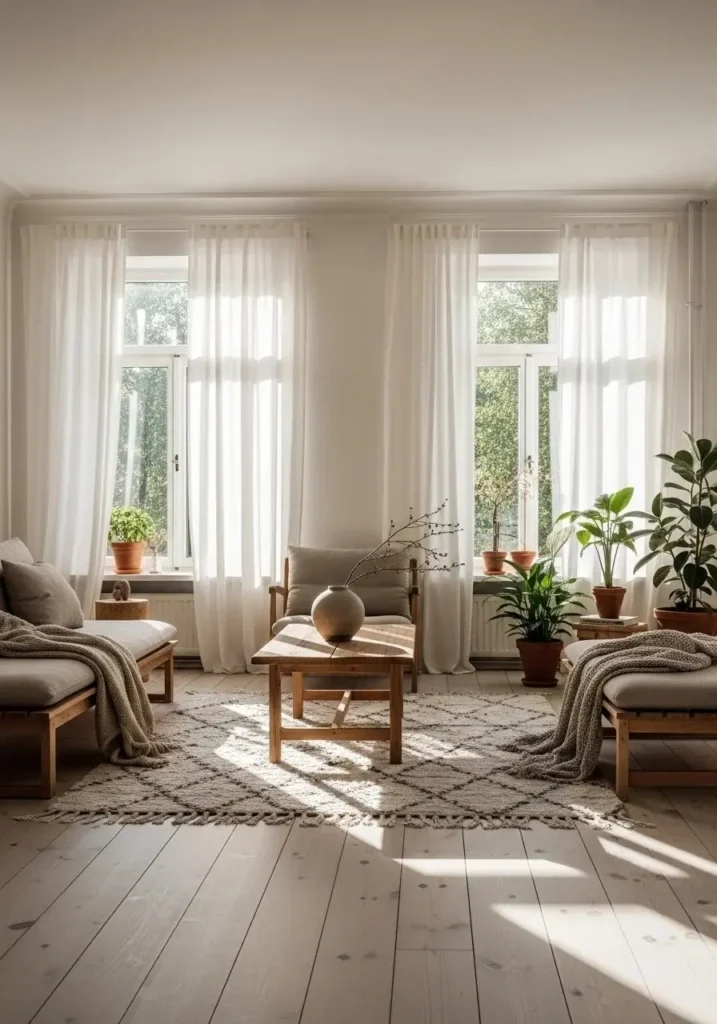
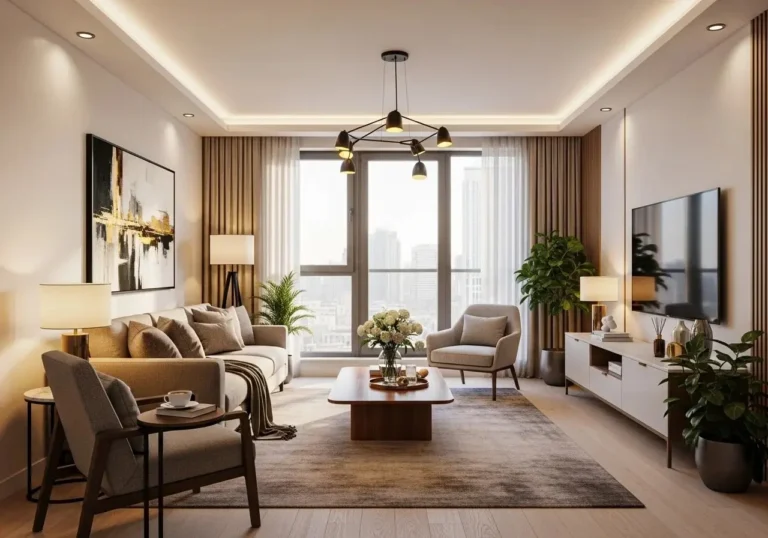
Japandi interiors thrive on natural light. Large windows, sheer curtains, and open spaces help light flow freely. This works because natural light enhances neutral tones and makes the room feel peaceful and alive. It also reduces the need for harsh artificial lighting.
Tip: Use light, airy curtains instead of heavy drapes to keep the space bright and soft.
7. Bring Nature Indoors
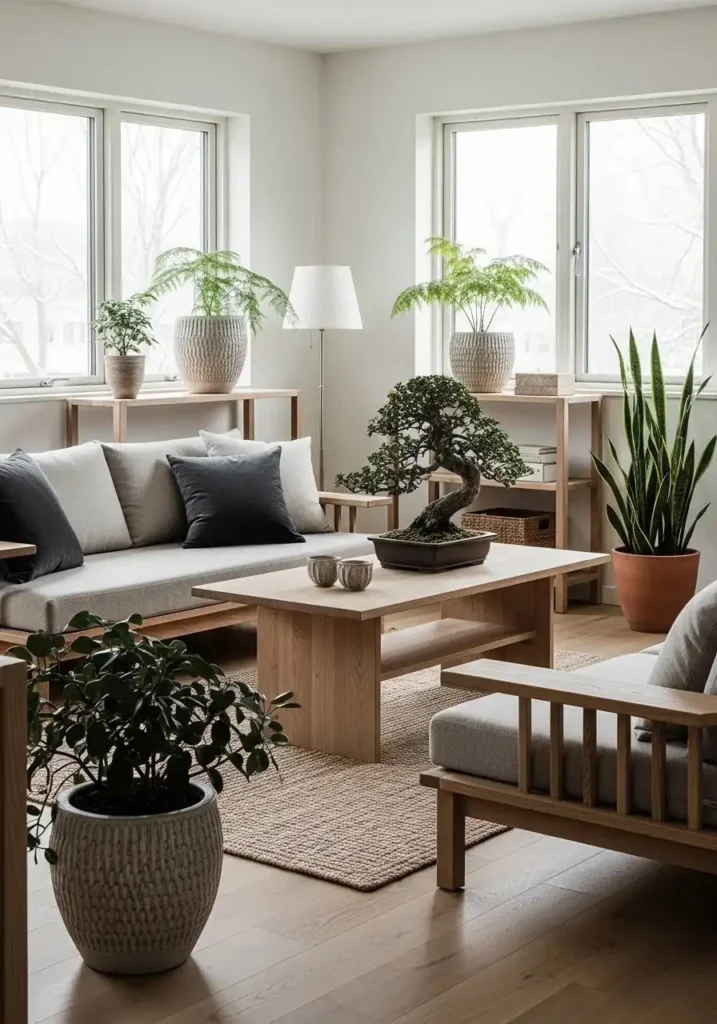
Plants are essential in Japandi living room ideas. A simple potted plant, bonsai, or olive tree can instantly elevate the space. This works because greenery adds life and freshness while maintaining simplicity. It also connects your home to nature, which is central to Japandi design.
Tip: Choose low-maintenance plants and keep the arrangement minimal—one or two statement plants are enough.
8. Use Simple, Functional Storage
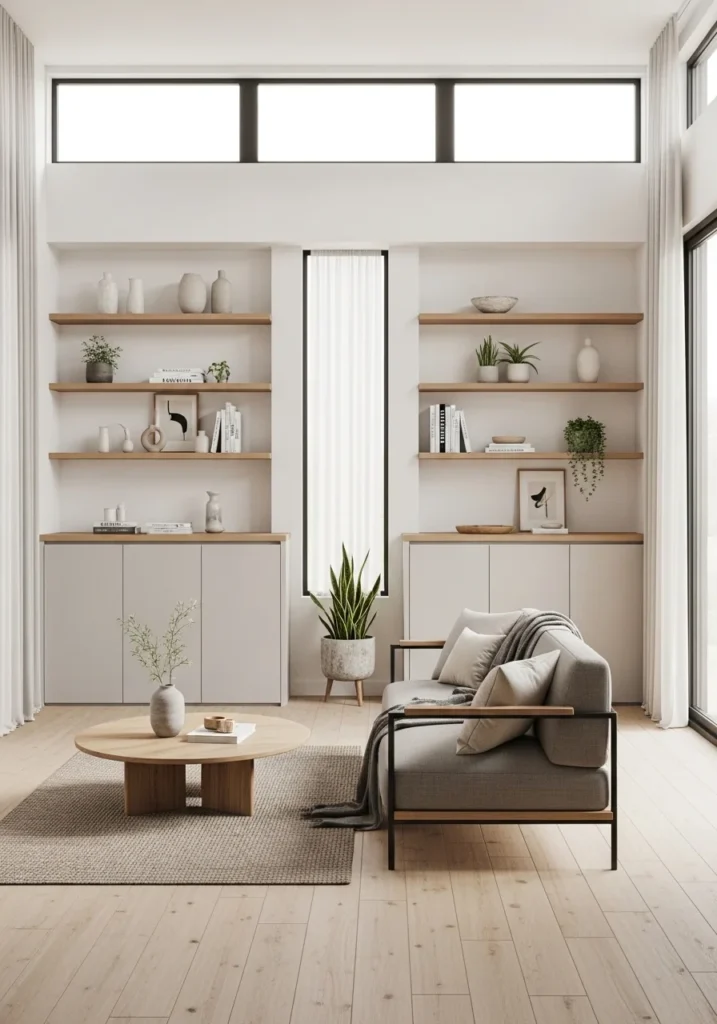
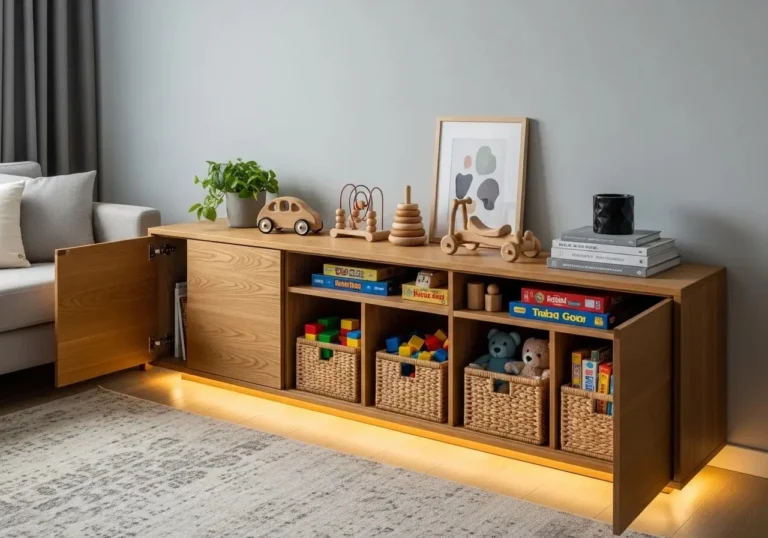
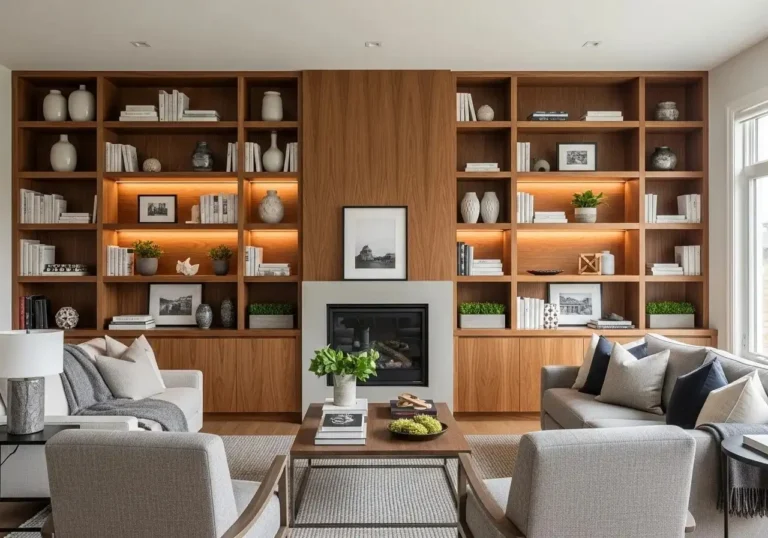
Clutter breaks the calm, so smart storage is key. Think built-in shelves, hidden cabinets, or simple wooden units. This works because it keeps everything organized while maintaining a clean aesthetic. When surfaces are clear, the room feels more peaceful.
Tip: Opt for closed storage to hide everyday items and keep your space looking tidy.
9. Focus on Clean Lines and Open Space
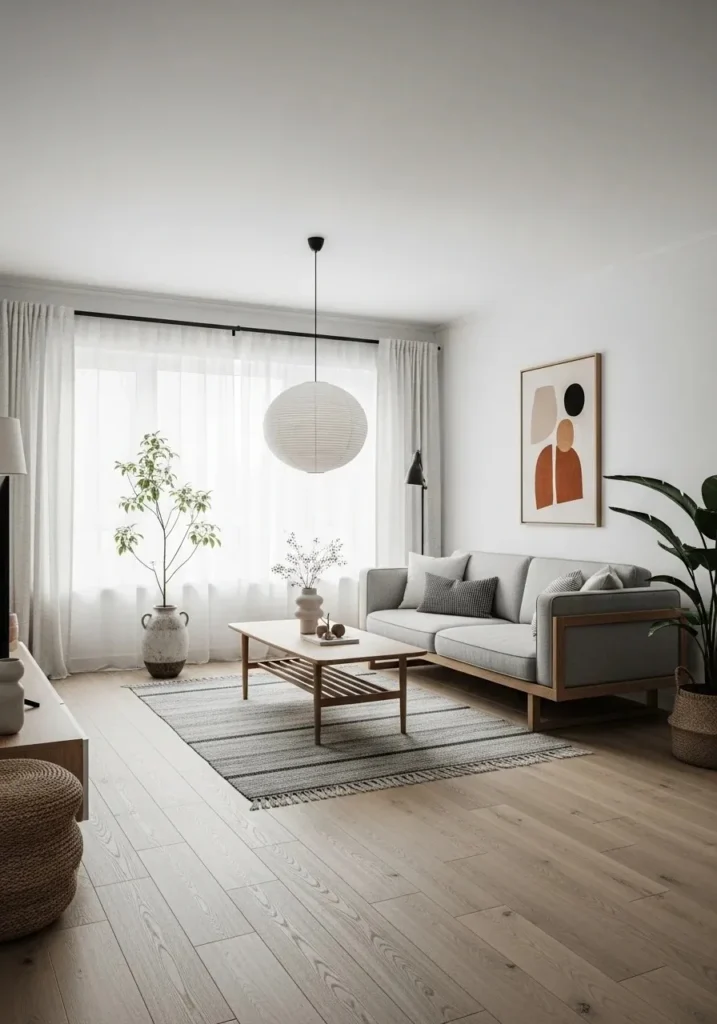
Japandi design avoids anything overly ornate. Straight lines, simple silhouettes, and open layouts define the space. This works because clean lines create visual clarity. Your eyes can rest, and the room feels effortlessly organized.
Tip: Leave some empty space around furniture—it makes the room feel more intentional and less crowded.
This Amazing Post Also For You: 14 Area Rugs in Living Room Ideas to Make Your Space Feel Cozy and Stylish
10. Add a Statement Yet Subtle Piece
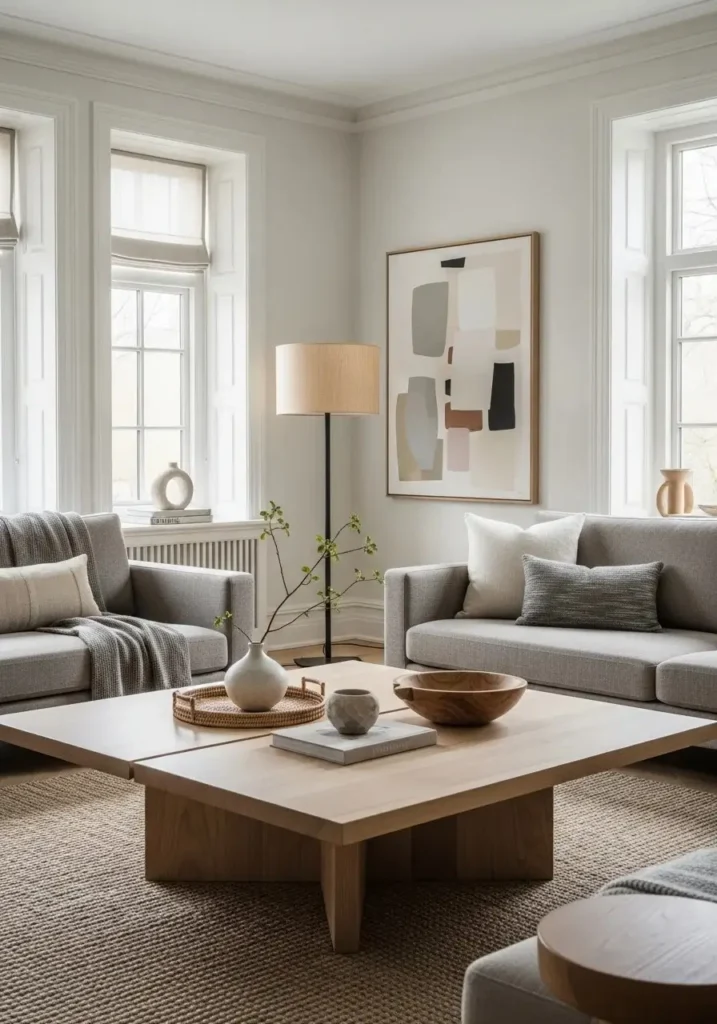
Even minimal spaces need a focal point. A single statement piece like a wooden coffee table, a textured wall, or a large artwork works beautifully. This works because it adds personality without overwhelming the room. It gives your eye something to focus on while keeping the calm vibe intact.
Tip: Choose something simple but impactful—avoid overly bold or busy designs.
11. Incorporate Japandi Living Room Ideas with Earthy Accents
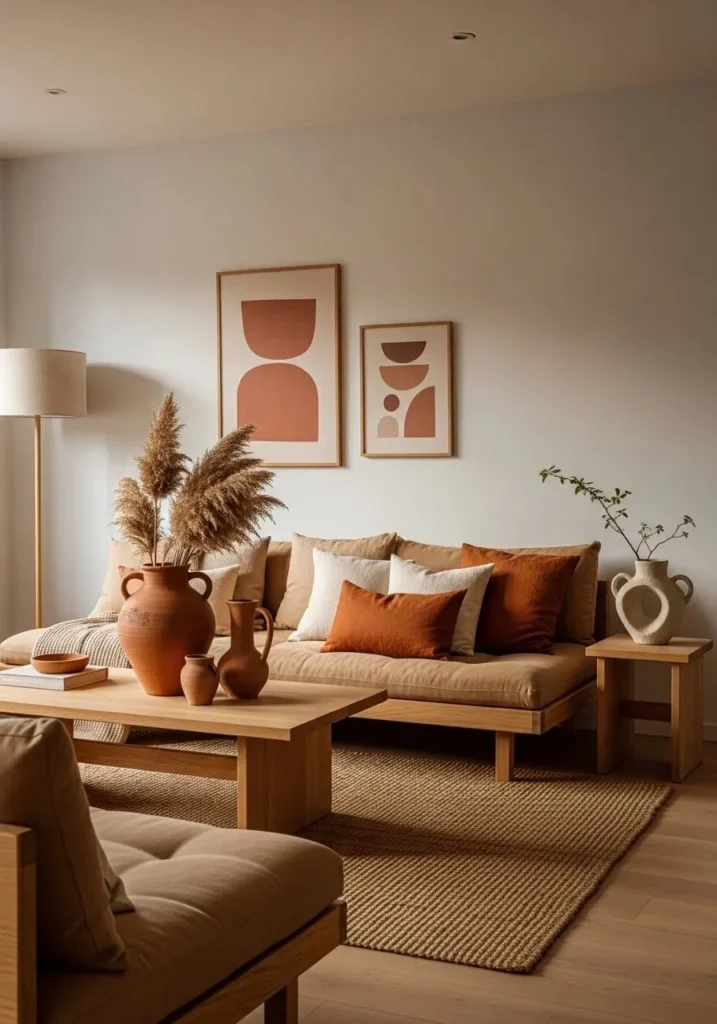
Earthy accents like clay, terracotta, and sand tones can bring subtle warmth into your space without overpowering it. Think soft brown cushions, muted pottery, or a textured wall in a warm neutral shade. This works because these colors echo nature and add depth while still feeling calm and grounded. They blend effortlessly with wood and neutral palettes.
Tip: Use earthy tones in small touches like decor or textiles rather than large furniture pieces to keep the look balanced.
12. Use Handmade and Artisan Decor
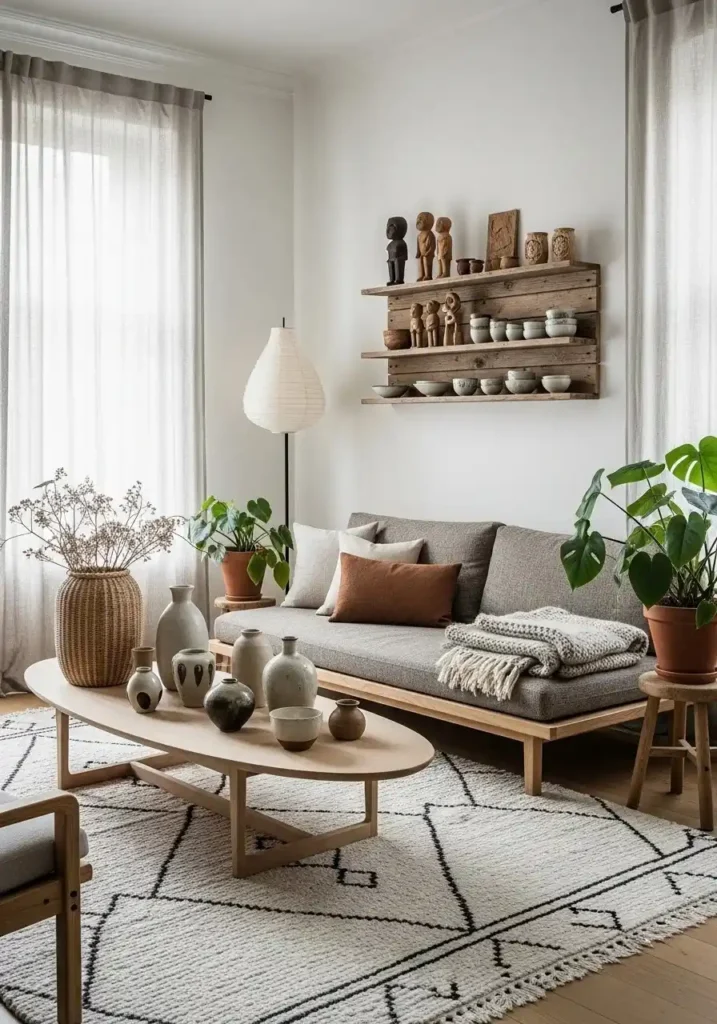
Handcrafted items like ceramic bowls, woven baskets, or handmade vases add authenticity to a Japandi living room. These pieces often carry slight imperfections that make them unique. This works because Japandi design values craftsmanship and simplicity over mass-produced perfection. It creates a more personal and soulful space.
Tip: Choose one or two artisan pieces instead of many to keep the room uncluttered and meaningful.
This Amazing Post Also For You: 17 Accent Walls in Living Room Ideas That Instantly Transform Your Space
13. Keep Window Treatments Light and Airy
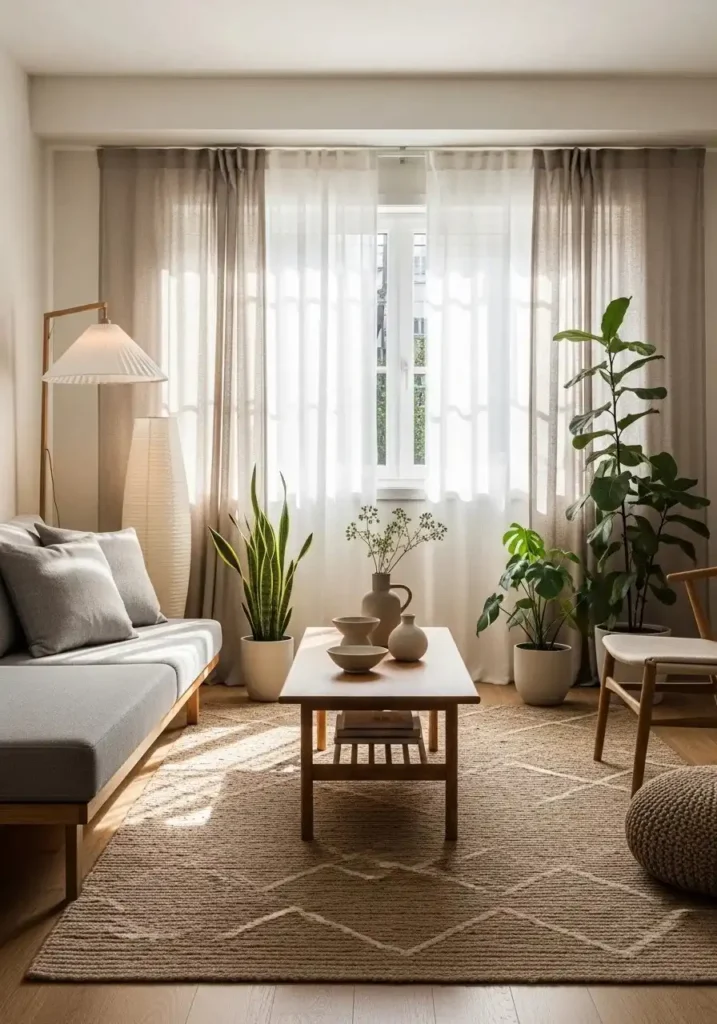
Heavy curtains can disrupt the calm flow of a Japandi space. Instead, opt for sheer linen curtains or simple blinds in soft neutral tones. This works because light window treatments allow natural light to filter through gently, creating a soft and peaceful glow throughout the room.
Tip: Stick to floor-length curtains in neutral shades to maintain elegance without adding visual weight.
14. Add a Low Wooden Coffee Table
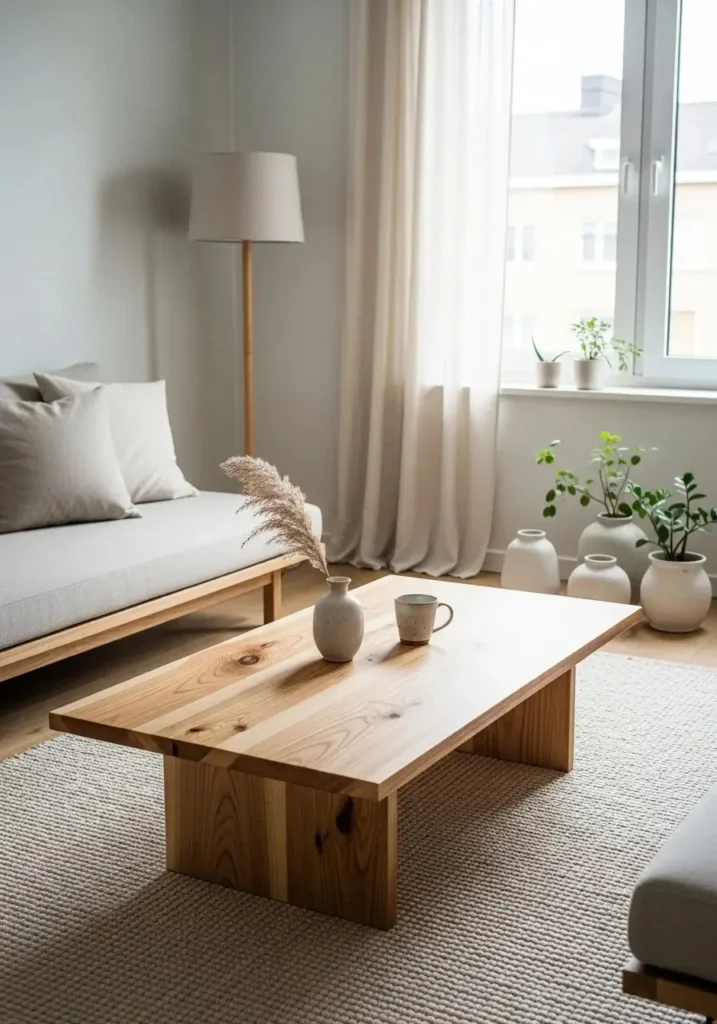
A simple, low wooden coffee table is a staple in Japandi interiors. Look for clean lines and natural finishes that highlight the beauty of the wood grain. This works because it keeps the room feeling grounded and connected to nature while maintaining a minimalist look.
Tip: Style the table with just one or two items like a book and a small vase to keep it clean and intentional.
15. Introduce Soft Ambient Lighting
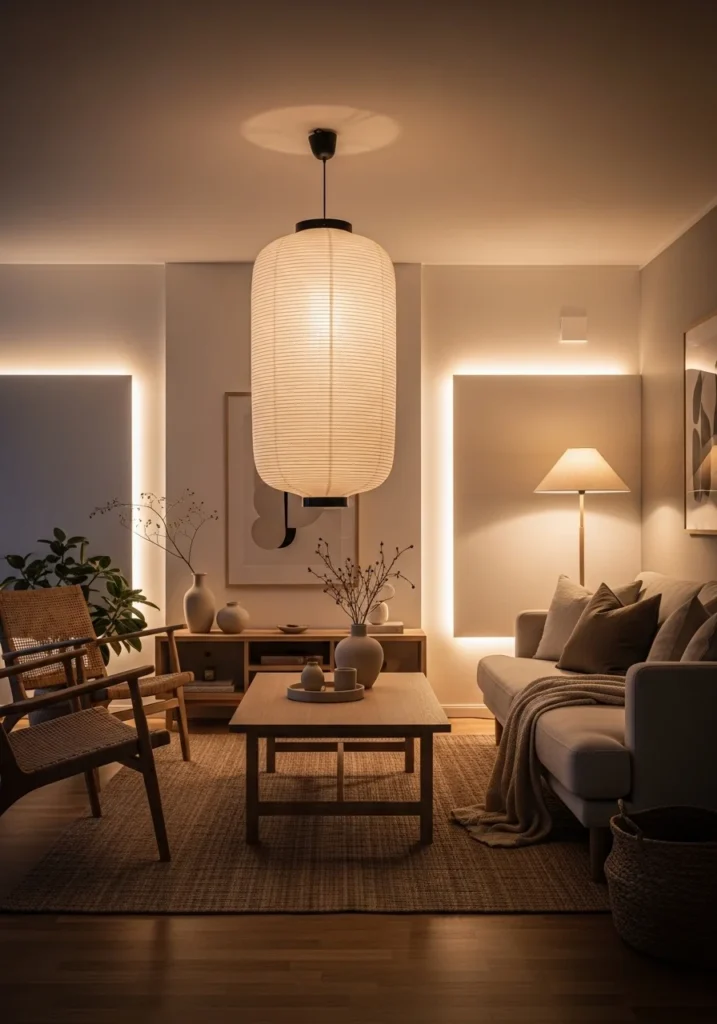
Lighting in a Japandi living room should feel soft and calming, not harsh. Use warm-toned bulbs, paper lanterns, or simple floor lamps to create a cozy atmosphere. This works because gentle lighting enhances the relaxing mood and complements the neutral color palette beautifully.
Tip: Place lights at different heights to create a layered, inviting glow in the evenings.
Also Read These Ideas Amazing: 13 Open Layout Living Room Dining Room Ideas That Feel Effortless and Beautiful
16. Embrace Negative Space
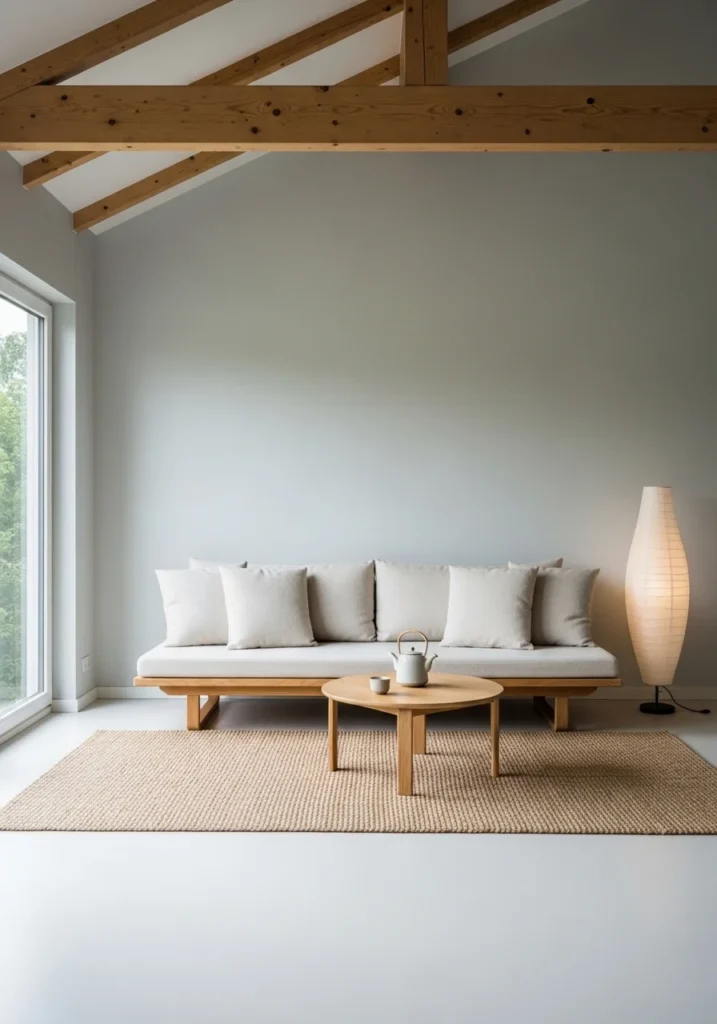
Empty space is just as important as filled space in Japandi design. Avoid the urge to fill every corner with furniture or decor. This works because negative space allows the room to breathe and makes each element stand out more clearly. It creates a sense of calm and balance.
Tip: Step back and remove one or two unnecessary items—you’ll instantly notice a more peaceful feel.
17. Choose Simple, Comfortable Seating
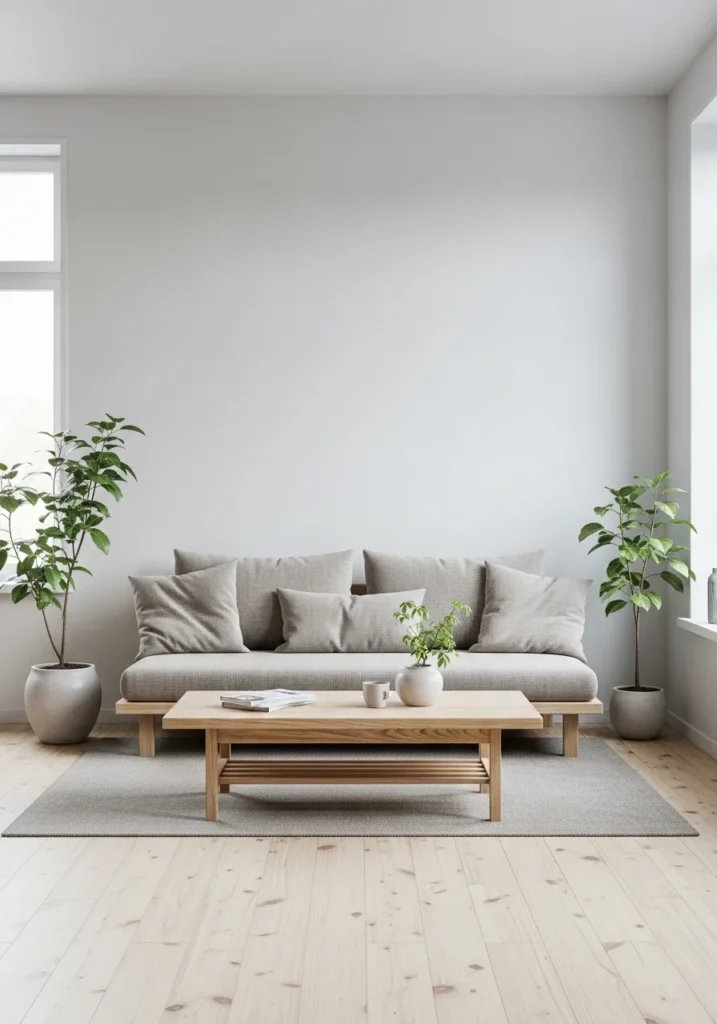
Comfort is key, but it should come in a simple form. Think clean-lined sofas with soft upholstery in neutral tones like beige, gray, or off-white. This works because it combines functionality with minimal design, creating a space that looks good and feels inviting.
Tip: Add one textured throw or cushion for warmth without cluttering the seating area.
18. Add Subtle Contrast with Dark Elements
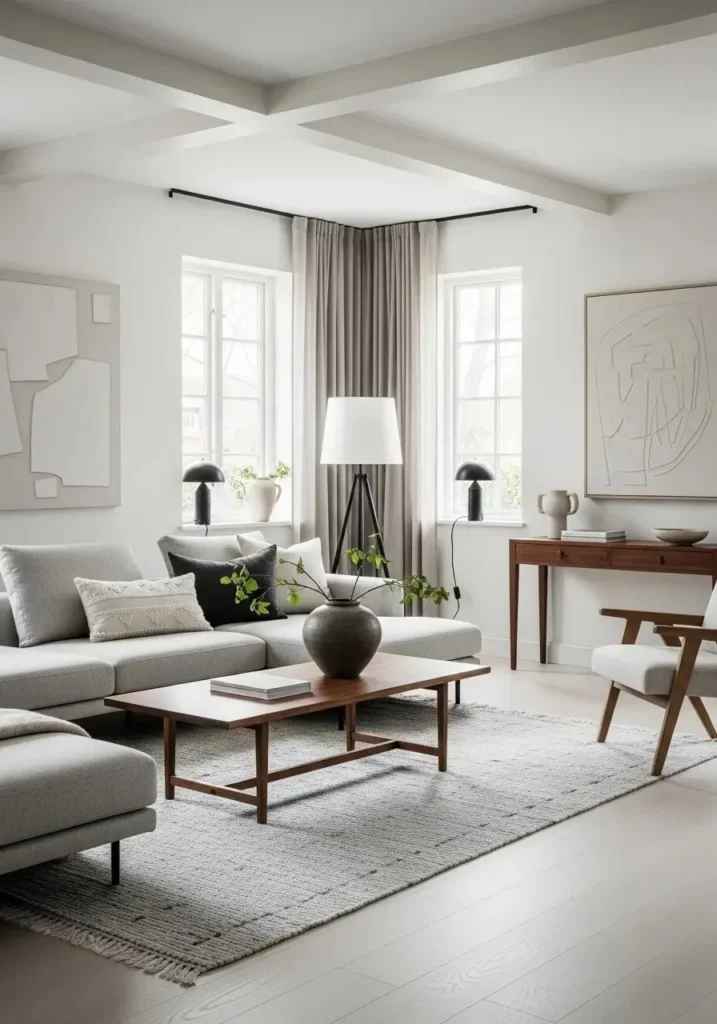
While Japandi spaces are mostly light and neutral, a touch of black or deep brown can add contrast and depth. Think black frames, dark wood, or minimal decor accents. This works because contrast prevents the room from feeling flat while still maintaining a calm aesthetic.
Tip: Use dark accents sparingly—just enough to create balance without overpowering the space.
Also Read This: 13 Curtains Living Room Ideas to Instantly Elevate Your Space
19. Keep Walls Simple but Thoughtful
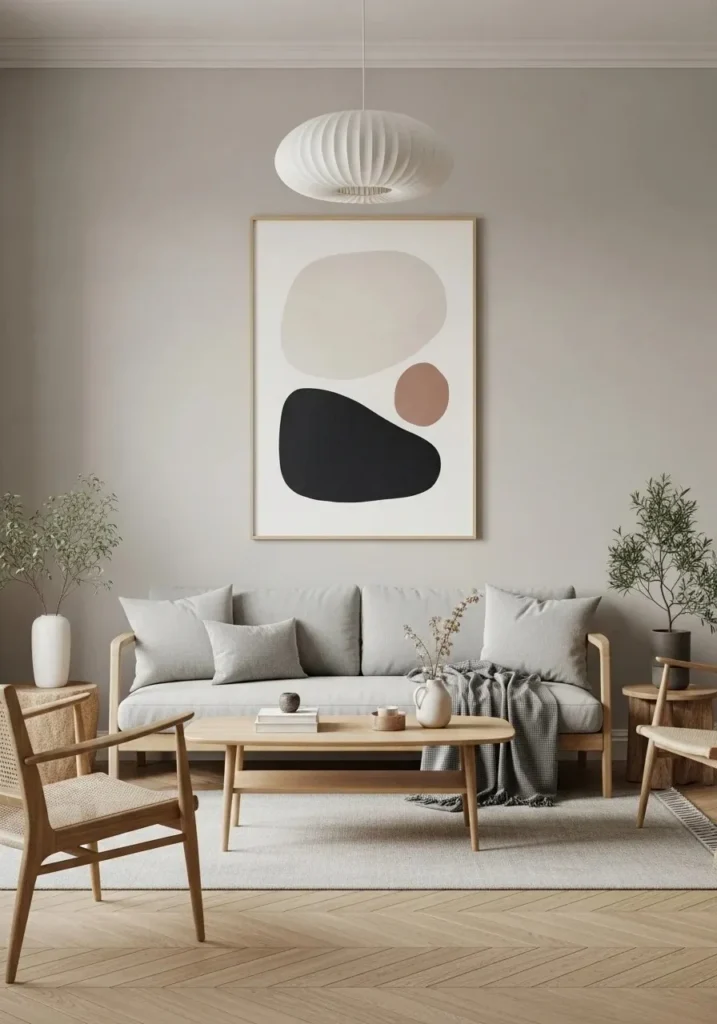
Walls in a Japandi living room should feel calm and uncluttered. A single piece of artwork, a textured wall, or a neutral paint color works best. This works because it avoids visual overwhelm and keeps the focus on the overall harmony of the room.
Tip: Choose art with soft tones or abstract designs that complement the color palette.
20. Use Natural Materials Everywhere
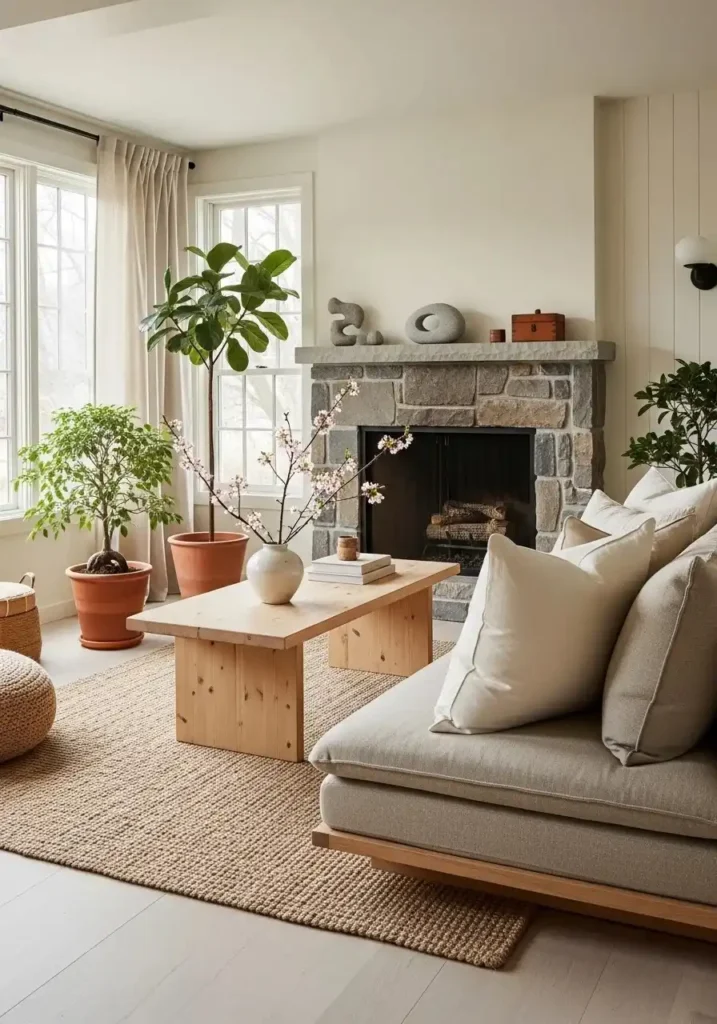
From furniture to decor, natural materials like wood, linen, cotton, and stone define Japandi style. These elements bring warmth and authenticity to the space. This works because natural materials age beautifully and create a timeless, organic feel that never goes out of style.
Tip: Mix materials subtly—like pairing a linen sofa with a wooden table and a stone vase.
21. Create a Calm, Balanced Layout
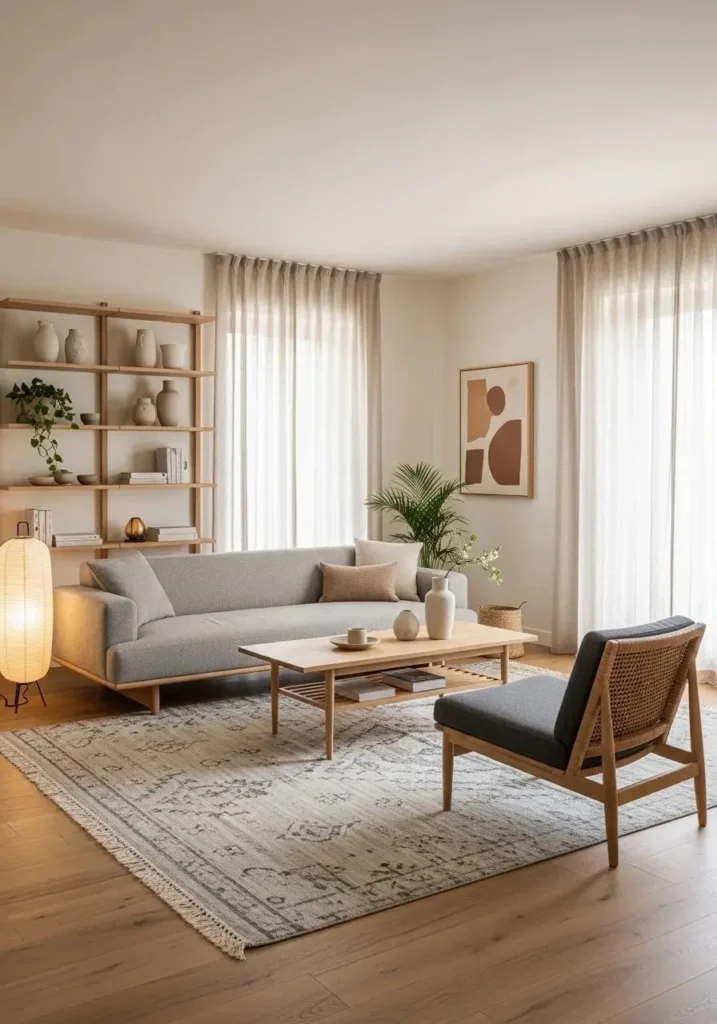
A Japandi living room isn’t just about decor—it’s about how everything is arranged. Keep the layout open, balanced, and easy to move through. This works because a well-planned layout reduces stress and makes the space feel more functional and peaceful.
Tip: Leave enough space between furniture pieces to maintain flow and avoid a cramped feeling.
Conclusion
Creating a home that feels calm, beautiful, and truly relaxing doesn’t have to be complicated. These Japandi living room ideas show how simplicity, natural materials, and thoughtful design can transform your space into a peaceful retreat. It’s not about having less for the sake of it—it’s about choosing better, living slower, and surrounding yourself with things that feel meaningful. Start small, trust your instincts, and let your space evolve over time. In the end, your living room should feel like a quiet place where you can breathe, unwind, and simply be.